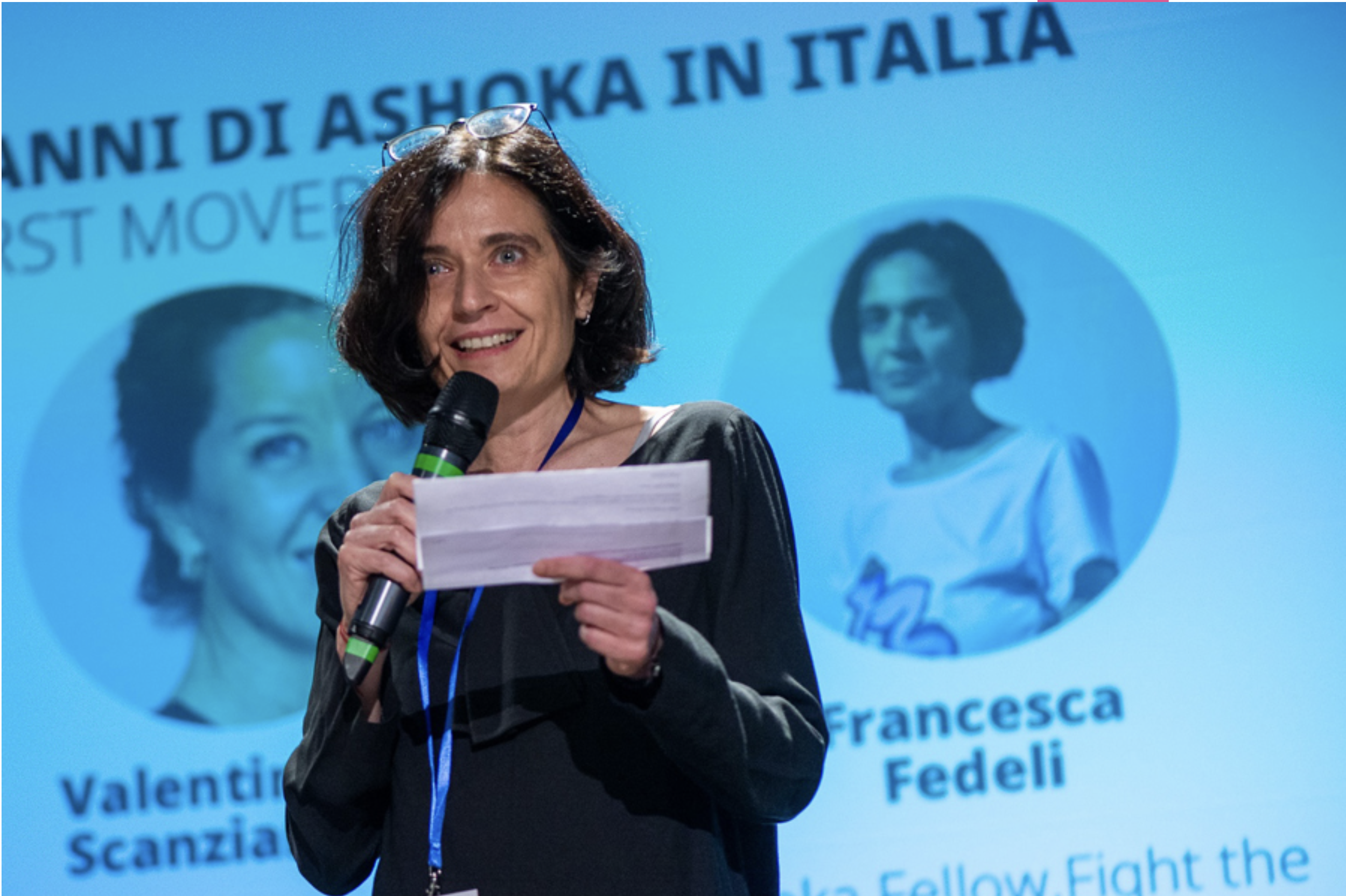


Francesca Fedeli, Imprenditrice sociale, alleata per i diritti dei pazienti e delle persone con disabilità
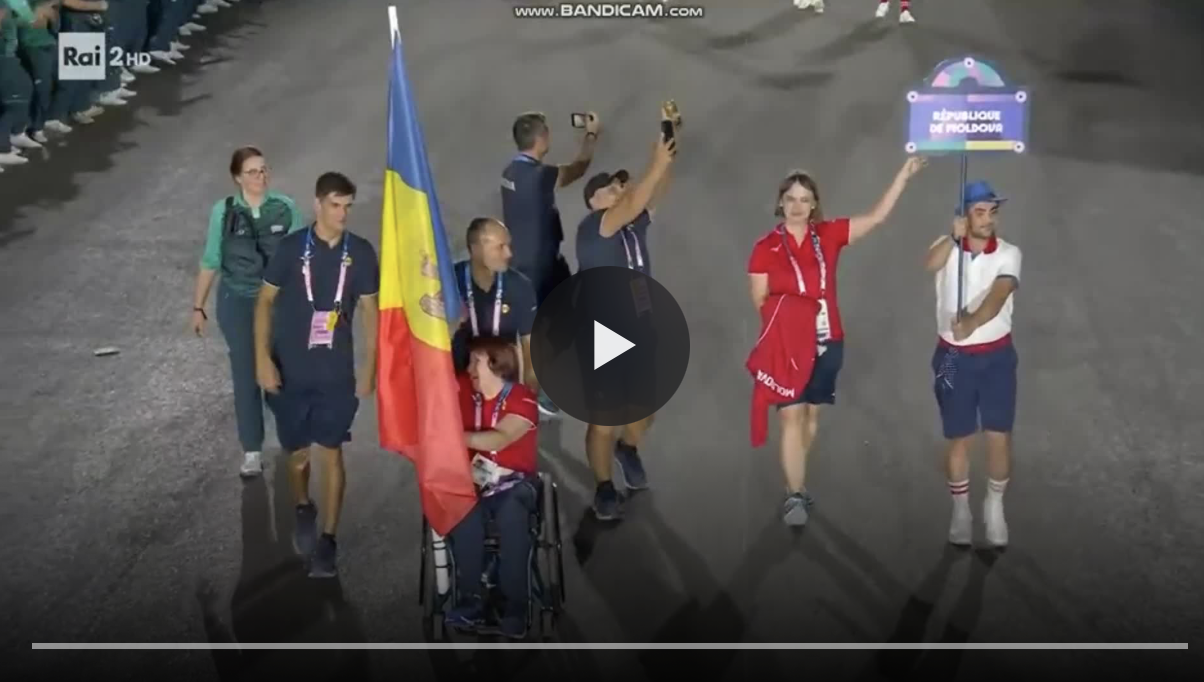
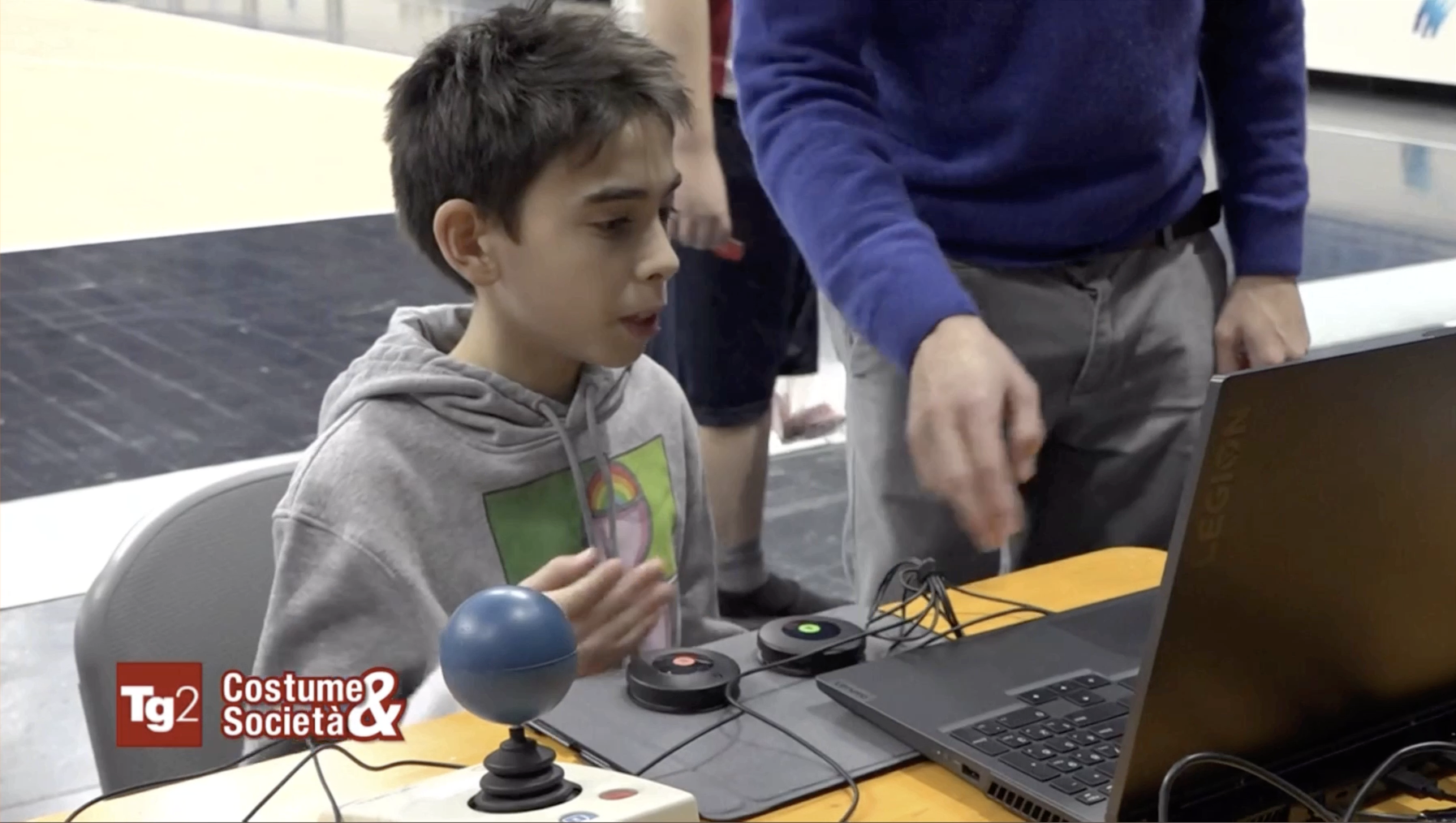
FightTheStroke menzionata su Rai2 alla cerimonia di apertura delle paralimpiadi di Parigi 2024.
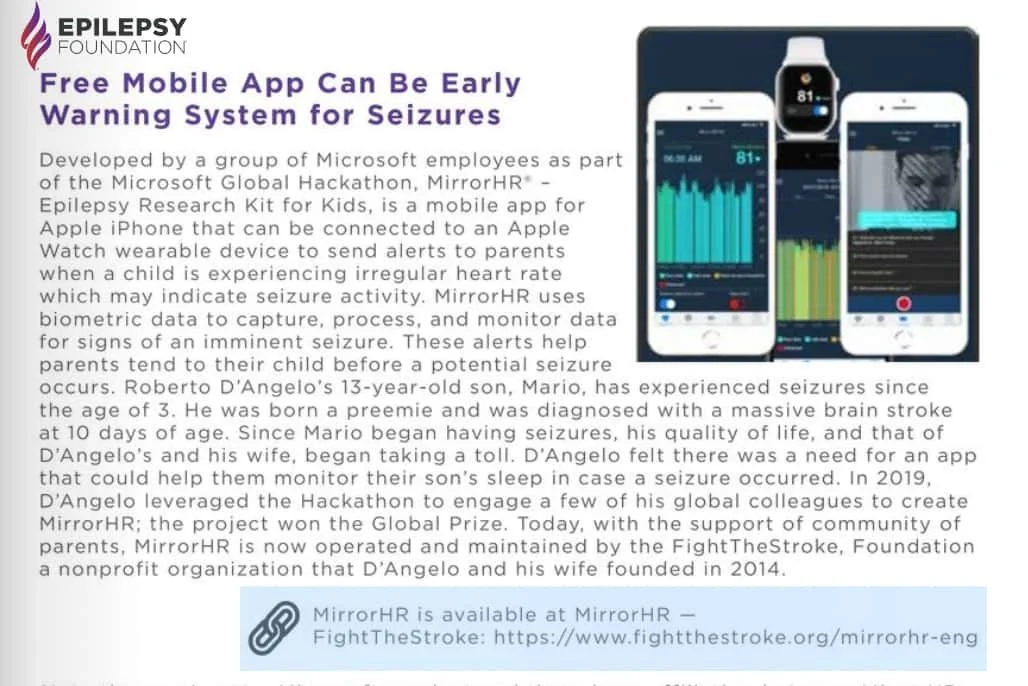
EPILEPSY FOUNDATION
Free Mobile App Can Be Early Warning System for Seizures
Developed by a group of Microsoft employees as part of the Microsoft Global Hackathon, MirrorHR™ - Epilepsy Research Kit for Kids, is a mobile app for Apple iPhone that can be connected to an Apple Watch wearable device to send alerts to parents when a child is experiencing irregular heart rate which may indicate seizure activity. MirrorHR uses biometric data to capture, process, and monitor data for signs of an imminent seizure. These alerts help parents tend to their child before a potential seizure occurs. Roberto D’Angelo’s 13-year-old son, Mario, has experienced seizures since the age of 3. He was born a preemie and was diagnosed with a massive brain stroke at 10 days of age. Since Mario began having seizures, his quality of life, and that of D’Angelo’s and his wife, began taking a toll. D’Angelo felt there was a need for an app that could help them monitor their son’s sleep in case a seizure occurred. In 2019, D’Angelo leveraged the Hackathon to engage a few of his global colleagues to create MirrorHR; the project won the Global Prize. Today, with the support of community of parents, MirrorHR is now operated and maintained by the FightTheStroke Foundation, a nonprofit organization that D’Angelo and his wife founded in 2014.
MirrorHR is available at MirrorHR – FightTheStroke: https://www.fightthestroke.org/mirrorhr-eng
La riforma organica del sistema di riconoscimento della condizione di disabilità, dei sostegni per la vita indipendente e delle misure per la tutela e la promozione dei diritti delle persone con disabilità è stata al centro dell'incontro con la ministra per la Disabilità, Alessandra Locatelli, al Festival dell'economia di Trento.
La riforma entrerà in vigore attraverso un percorso di sperimentazione a partire da gennaio 2025 su nove province.
I cardini, ha spiegato la ministra, sono la semplificazione del sistema di accertamento della disabilità civile e l’introduzione del Progetto di vita, con l'obiettivo di superare la frammentazione degli interventi e trovare risposte migliori ai bisogni della persona.
Si passa dall’assistenzialismo all’inclusione e alla valorizzazione della persona, nella consapevolezza che la vita di ognuno di noi non è fatta solo di terapie ma anche della dimensione sociale che ci permette di fare ciò che ci piace, con il diritto di essere felici. È necessario, ha sottolineato la ministra, cambiare sino in fondo il modo in cui pensiamo la disabilità, cogliendo l’importanza di investire sulle persone semplificando contestualmente il quadro burocratico.
Ma è importante anche cercare di rivedere il nostro linguaggio nella narrazione della disabilita, ha detto Francesca Fedeli, Presidente di FightTheStroke Foundation. Da superare anche l’attuale modo di considerare le persone disabili, vedendole invece come parte attiva della società.
Alessandro Solipaca, dirigente di ricerca dell’Istituto Nazionale di Statistica, ha fornito alcuni dati. Sono oltre 7 milioni e mezzo le persone con una certificazione o alle quali viene erogata una pensione o un’indennità legata alla disabilità. Oltre la metà di queste persone dichiara di essere in cattive condizioni di salute, più frequenti al crescere dell’età. Qualche segno di miglioramento si nota invece nel livello di istruzione e nel campo del diritto al lavoro, nonostante un quadro complessivo ancora sostanzialmente negativo.
È intervenuto anche Carlo Giacobini, Direttore dell’Agenzia Iura, secondo il quale è necessario potenziare le risorse per da poter attuare una “svolta completa” e arrivare a un vero progetto di vita e in generale, al di là della riforma, serve potenziare gli incentivi per l’assunzione delle persone con disabilità.
Molti enti del terzo settore, ha affermato il ministro, si sono dati da fare per aumentare l’occupazione delle persone con disabilità anche in momenti difficili quali quelli della pandemia, ma è certamente importante andare oltre la buona volontà dei singoli e compiere un percorso complessivo anche attraverso l’attualizzazione della legge 68
Francesca Fedeli, Imprenditrice sociale, alleata per i diritti dei pazienti e delle persone con disabilità
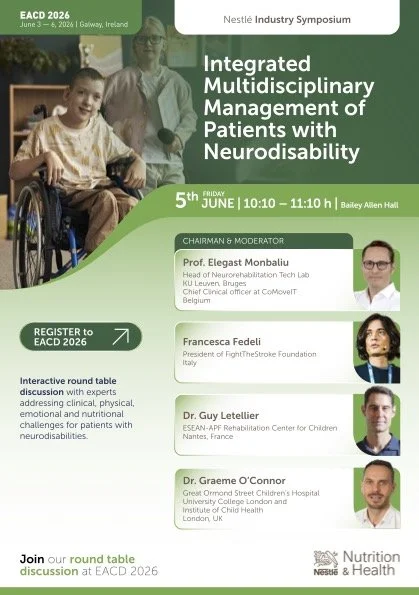
EACD 2026 - Integrated Multidisciplinary Management of Patients with Neurodisability, June 2026
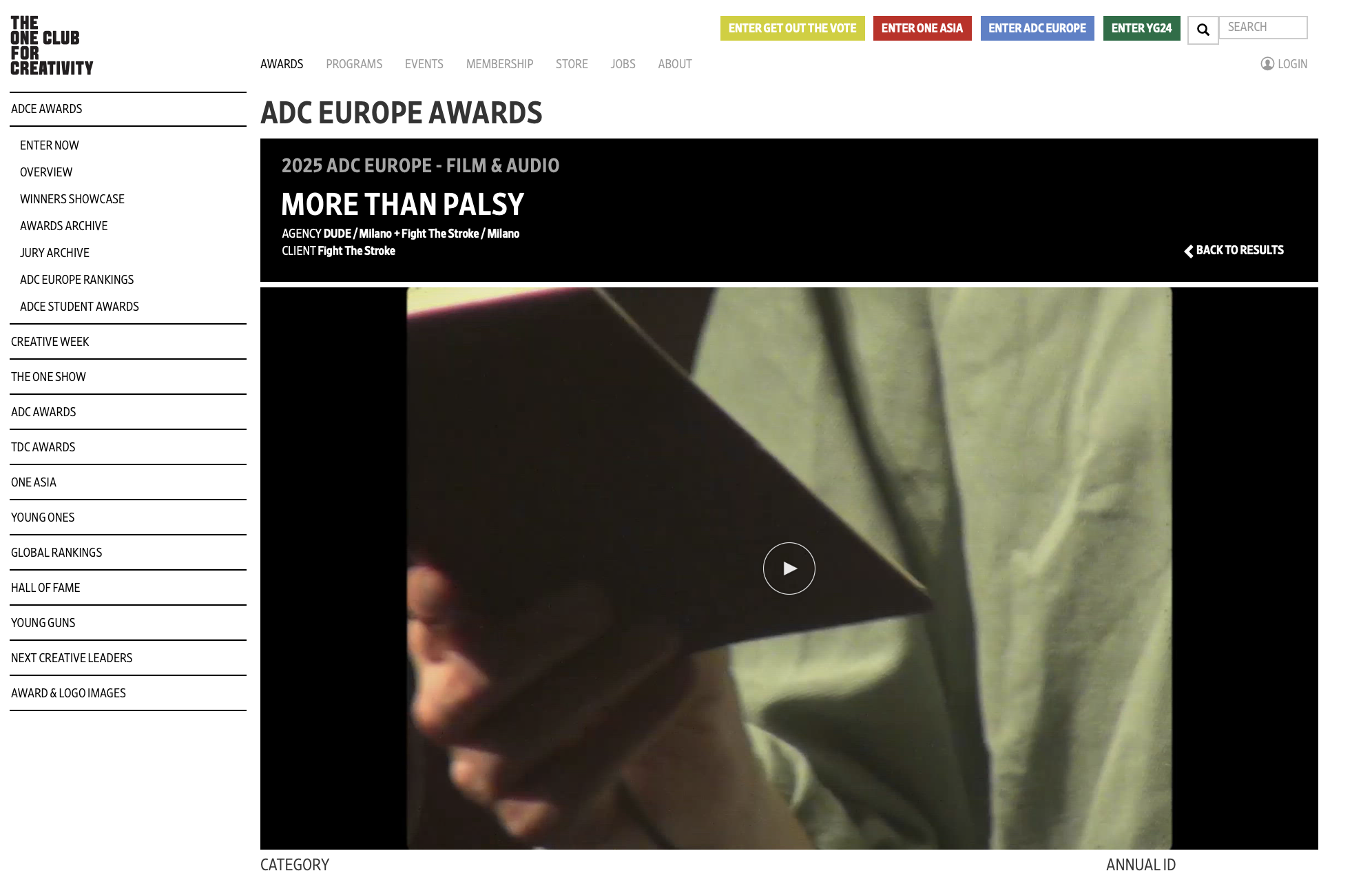
Our “More Than Palsy” campaign is more than just a film: it’s a movement that redefines how we see disability. It celebrates the voices of those who live with Cerebral Palsy every day, without resorting to pity or stereotypes, and invites the world to recognize their strength, humor, and humanity. Through the stories of the film’s protagonists and the words of the poem, we see that it truly “takes balls” to live with this condition.
2025 AWARDS
Oltre 8 pazienti su 10 (84,8%) incontrano difficoltà nel percorso per ottenere ausili e protesi attraverso il Servizio sanitario nazionale, mentre il 63% ha sostenuto spese personali per ottenerli o utilizzarli. Lo rilevano due survey condotte dal Centro studi di Confindustria dispositivi medici e promosse da Aito (Associazione italiana di terapia occupazionale) in collaborazione con altre 13 associazioni di settore su pazienti/caregiver e professionisti sanitari di assistenza protesica, che evidenziano criticità diffuse, ma anche un dato positivo: l’84,8% dei pazienti si dichiara soddisfatto dell’ausilio ricevuto. L’indagine è presentata all’Expo Sanità di Bologna. Per il presidente dell’associazione Ausili di Confindustria Dispositivi Medici, Elena Menichini, i dati dimostrano “la necessità di intervenire sul Nomenclatore, rivedere gli ausili messi a gara, garantire uniformità sul territorio semplificando i processi”.
Tra le principali difficoltà segnalate dai pazienti per ottenere un ausilio emergono i tempi di attesa troppo lunghi (56,5%), le procedure burocratiche complesse (51,1%) mentre il 65,2% dichiara di sentirsi poco informato sulle possibili soluzioni disponibili.Nonostante quasi la metà (47,8%) effettui una valutazione preventiva con professionisti sanitari, nel 54,4% dei casi l’ausilio deve essere modificato una volta ricevuto. Inoltre, al 70,6% dei pazienti è capitato che almeno una volta accessori o adattamenti utili non fossero coperti dal Servizio sanitario nazionale.
Gli ausili considerati includono principalmente dispositivi per la prevenzione e terapia (come cuscini antidecubito e ventilatori), ortesi e protesi, ausili per la mobilità (carrozzine, deambulatori), per la statica e per la cura e l’igiene personale.
FightTheStroke Foundation, founded by Francesca Fedeli and Roberto D’Angelo after their son’s stroke at birth, is dedicated to improving the lives of children with a disability of cerebral palsy.
They applied mirror neuron research to her son’s rehabilitation, discovering that “empathy was at the core of his treatment,” and that peer-led therapy led to remarkable progress.
They matched this insight with technology and developed a toolkit for dynamic rehabilitation exercises for children using devices like the Kinect. They piloted this approach with families, collecting feedback and preparing for clinical trials.
Their flagship innovation, Mirrorable, is a digital rehabilitation platform leveraging mirror neuron theory and tailored video content to support motor recovery in children, while empowering families to play an active role in therapy.
From 2014-2016, they built an active community of over 1200 families and 100 young adults with Cerebral Palsy in Italy and established partnerships abroad.
Globally, 50 million people face motor impairments due to a disability of Cerebral Palsy, with a much larger network of affected families. Stroke is among the top ten causes of death for children and one among 100 leading causes to Cerebral Palsy, yet public awareness is extremely low. Early detection is still limited; rehabilitation is often inadequate and not tailored to children.
During their participation in the Globalizer co-created by Ashoka and Philips Foundation in 2016, they highlighted the following key factors contributing to the magnitude of the problem:
Lack of children-tailored rehabilitation solutions
Absence of scientifically proven, evidence-based methods to support recovery
Families historically excluded from the rehab process
Fragmented advocacy and low awareness
Late intervention and insufficient data collection
Healthcare innovation not informed by people with lived experience
Based on their systems change analysis, FightTheStroke made it a mission to address the absence of methods to treat motor impairments by making motor outcome-based rehabilitation the norm for young people with a disability of Cerebral Palsy in Italy and beyond.
there are 50 million people around the world affected by this issue. how could i hope to change the lives of all of them without support from other foundations? for me, building alliances was the key ingredient. the globalizer program gave me the framework and language to understand and pursue systemic change. before, i knew what i wanted to achieve, but i didn’t know how to structure the path to get there. the process helped me clarify my strategy, connect with allies, and scale our impact far beyond what we could have accomplished alone.
The strategy to make motor outcome-based rehabilitation the norm included building the “New Rehab Ecosystem”.
Some of the tactics they deployed towards the mission as a part of the strategy include:
1) Co-creating Mirrorable with Families & MIRROR-LABS with Allies
FightTheStroke piloted the Mirrorable platform with 20 families and iteratively kept refining it based on real-world feedback.
Emphasis on co-creation: families were not passive recipients but active partners in shaping the solution.
what we have not achieved is the scale up of our own platform. at the beginning, we thought that we could scale it horizontally to other fields, but this didn’t work. but then what i learned from ashoka, it was not a matter of patenting our idea, but we were also happy that others could ‘steal’ our idea and make their own path.
Over the years, they developed multiple alliances, as with Ospedale Gaslini in Genova, Politecnico di Milano, Bocconi University, other private and public organisations that helped to solve main problems within the framework of MIRROR-LABS (a virtual lab aimed to match families issues with researchers solutions).
Through MIRROR-LABS they co-design solutions with families and for families and explore together the leading edge of science, design, technology, business models in order to create a more inclusive world that can last after them.
2) Co-creating a Consortium with Allies to Integrate Learnings into National Healthcare Systems
Although FightTheStroke initially faced challenges in scaling up their rehabilitation platform independently, the success and credibility of their pilot projects opened the door to a much larger opportunity.
Their innovative approach and early results attracted the attention of leading researchers and clinicians across Europe and Australia, ultimately resulting in an invitation to co-create a major international Consortium. This Consortium named AINCP (Artificial Intelligence in Unilateral Cerebral Palsy) was established to collectively advance the field of pediatric neurorehabilitation.
The Consortium secured a €6 million grant from the European Union to fund an ambitious clinical trial. The primary objective of this initiative is to integrate evidence-based, patient-centered rehabilitation practices into national healthcare systems across participating countries. By pooling expertise and resources, the Consortium aims to move beyond isolated pilots and embed these innovations at a systemic level, ensuring that children with cerebral palsy receive the highest standard of personalized care regardless of where they live.
A key feature of the Consortium’s strategy is the use of telemedicine and data-driven methodologies. By harnessing artificial intelligence, digital tools and remote monitoring, they plan to support national healthcare systems in delivering personalized rehabilitation programs tailored to each child’s unique needs. This approach not only increases accessibility—especially for families in remote or underserved areas—but also ensures that interventions are informed by real-time data and the latest scientific evidence. Through this collaborative effort, FightTheStroke and its partners are working to transform pediatric neurorehabilitation from a fragmented, top-down model into an integrated, patient- and family-centered system across Europe and beyond.
3) Co-creating a Peer Learning Community for Parents to Consult each other
Recognizing the isolation many families experience, FightTheStroke leveraged social media to create a vibrant online space (Facebook Communities) where more than 1,200 families in Italy—and many more internationally—could connect, share experiences, and support one another.
everything was around social media. this is the place where we interact continuously with these 1,200 families in italy. every day there is someone who says, ‘i have this problem,’ but i do not need to answer anymore because the community does. it’s enough that another mother who already came through this problem has the answer, the solution.
This online community quickly became a lifeline for families, offering not only emotional support but also practical advice and shared resources. Over time, the community evolved to include both online and offline spaces, such as family gatherings and the formation of specialized sub-communities for young adults with cerebral palsy, who face unique challenges as they transition into adulthood.
Importantly, Francesca’s model empowered families to move from being passive recipients of information to becoming active advocates and peer leaders. Experienced parents began to take on mentorship roles, answering questions and guiding others through challenges they had already faced. This peer-to-peer support structure not only lightened the load for Francesca and her team but also fostered a sense of agency and solidarity among families, making the community truly self-sustaining.
4) Co-created the first Perinatal and Children’s Stroke Centre in Italy
Recognizing the critical gaps in early diagnosis and coordinated care for children with neurological conditions, FightTheStroke co-created the first Italian Center for Perinatal and Children Stroke, together with Gaslini Children's Hospital, a major Italian children hospital.
so now when people come to us, we send them to this hospital. it’s for free. they have a day hospital screening, do any kind of exam or scans, and then at least they go out, have a diagnosis and a rehabilitation plan.
This center represents a significant shift in the landscape of pediatric neurorehabilitation in Italy. For the first time, families have access to a dedicated facility where comprehensive screening, diagnosis, and the development of individualized rehabilitation plans are provided at no cost.
Beyond the initial diagnosis, the center also serves as a hub for research and for ongoing support. Families are linked to a network of specialists and peer communities, ensuring that they are not left to navigate the complexities of care alone.
By establishing this center, FightTheStroke has created a replicable model that bridges the gap between medical innovation and real-world access, offering hope and practical solutions to families across the country.
5) Creating and Disseminating Knowledge to Inform, Invite & Involve More Allies for the “New Rehab Ecosystem”
Beyond sharing the Mirrorable platform, FightTheStroke is creating and disseminating knowledge to spread awareness about the problem and invite involvement towards the mission through a variety of channels including:
Published a long selling book (from 2015 to 2024) - LOTTA E SORRIDI- to spread awareness, which has sold 4000 copies; in addition their story has been published in 10 more books.
Created a YouTube playlist with the largest repository of video-interviews with our network of experts in healthcare, sports, education, technology, design and everything related to Cerebral Palsy. It has 135 videos and 861 subscribers.
Given 100 keynote talks, among participating to around 500 events - from TED Global in Edinburgh to World of Business Forum in Milan, from Frontiers of Health in Berlin to Ciudad de las Ideas in Mexico.
Written 13 scientific publications in peer reviewed journals; supported more than 30 thesis to further study FighttheStroke model.
Created international campaigns like More than Palsy to shift the storytelling around disability.
Received more than 100 recognitions and awards for their work.
Organized Call4Brain-TEDMED events to create space to discuss challenges of medicine, science and technological innovation. So far, they have had 6 events attended by more than 1000 people.
Gotten involved with 23 networks and alliances like the Eisenhower and The Global Good Fund fellowships and joined the boards of 5 organizations to further spread awareness about and advocate for people with Cerebral Palsy.
Created an alliance with the International Cerebral Palsy society and have a network reach with organizations in the space in more than 60 countries.
Become part of the Valuable500 Directory in Italy (founded by another Ashoka Fellow), to end disability exclusion in the workplace.
Developed and shared the MirrorHR epilepsy research kit: 16,000+ downloads from the app store, translated in 21 languages, available for free in 61 countries.
Ashoka Fellow elected in Italy
Became an Ashoka Fellow in 2015
Venture Partners
Elected with support from
Participated in the Globalizer in
2016
Globalizer Partners
Participated with support from
Elements of the Collaborative Systems Change Strategy
Hover/Click on things to dive deep
Systems Change Goal
Type of Root Cause identified as a Leverage Point for Systems Change (Donella Meadows)
Type of Strategy
Endgame / Pathway applied towards Activating a Network of Changemakers towards the targeted Systems Change
Types of Partners Engaged
Types of stakeholders activated as changemakers towards the systems change
Government AgenciesIndustry-specific Companies / OrganizationsMedia CompaniesPublishersInformal & Formal Communities / UnionsUniversities / Schools
Levels of Stakeholder Engagement
The depths of engagements in play for the different stakeholders (CoCreative)
Their work contributes towards
Sustainable Development Goals
Sustainability Principles
The root causes of global socio-ecological unsustainability their work is addressing (FSSD)
barriers to healthbarriers to competencebarriers to impartialitybarriers to participationbarriers to meaning making
Il Gruppo Bosch in Italia sostiene Fondazione ASPHI Onlus con il progetto “Play-Able”, per un Natale all’insegna dell’inclusione digitale
Postazioni di gioco accessibili donate a ragazzi con disabilità, per favorire autonomia, apprendimento e socialità
Il creator digitale Favij ambassador dell’iniziativa, per raccontare il valore dell’inclusione attraverso il linguaggio universale del videogioco
Il 3 dicembre, Giornata internazionale delle persone con disabilità, il video di Bosch sui canali social e interni dell’azienda per raccontare emozioni, sogni e nuove possibilità aperte dal gaming accessibile
Posted at 06:00h in Interviste by BET SHE CAN
Francesca Fedeli è una donna risoluta e con un’energia contagiosa, lavora come imprenditrice sociale: “Come per altri miei colleghi Ashoka fellows (la fondatrice di BET SHE CAN è una tra questi!) ci occupiamo di risolvere un problema sociale, che abbia un impatto universale” spiega. Fedeli fa sue le parole del fondatore di Ashoka Bill Drayton: “Non mi accontenterò mai di dare solo una culla termica o di formare un solo medico a riconoscere i segni dell’ictus perinatale: non mi fermerò fino a quando non avrò rivoluzionato l’intero settore delle tante cause che concorrono alla condizione di disabilità di Paralisi Cerebrale”. La Fondazione Fight The Stroke supporta la causa dei giovani sopravvissuti all’ictus e con una disabilità di Paralisi Cerebrale, per garantire loro – e alle loro famiglie – un futuro migliore.
Con il mio lavoro, attraverso la Fondazione Fightthestroke, ho contribuito a portare attenzione su un tema spesso invisibile: la disabilità permanente di Paralisi Cerebrale che riguarda 50 milioni di persone nel mondo, da bambini piccoli che sono appena usciti dalla pancia della loro mamma fino a persone adulte. Ho creato, insieme a mio marito Roberto, un movimento che ha dato voce a tante famiglie e ha portato innovazione nella riabilitazione e negli sport adattati, nella ricerca scientifica, nelle tecnologie assistive, nel design inclusivo: cambiando così il sistema di cure e le prospettive di vita delle persone con Paralisi Cerebrale, come mio figlio Mario. Ho reso più accessibile l’informazione e l’accesso alle cure con evidenza scientifica, favorito l’innovazione e la collaborazione tra medici, istituzioni e persone con esperienza di vita, e contribuito così a migliorare la qualità di vita di tanti bambini e delle loro famiglie. Dal 2014 ad oggi il nostro lavoro ha permesso di migliorare la diagnosi precoce e l’aderenza alle terapie, riducendo così anche i costi per la società.
Credo che alle persone piaccia la mia trasparenza: noto che spesso mi usano come ‘centravanti di sfondamento’ per rappresentare le esperienze di gruppi di persone marginalizzate e rendere espliciti i loro bisogni. Credo invece che a molte persone non piaccia il mio perfezionismo, che può risultare intenso per chi lavora con me….anche meno
Vorrei darmi tregua a volte, vorrei imparare a lasciar andare di più, le persone e le cose. E poi vorrei debellare l’epilessia, l’abilismo e chi è abituato a presumere tutto, guardando una sola etichetta diagnostica.
Sì, spesso. Quando sei genitore di un bambino con una disabilità, i professionisti del settore tendono a dirti cosa non si può fare o meglio cosa tu come madre non puoi fare o non puoi sapere, non sei mai presa sul serio fino in fondo. Mi hanno detto che non ce l’avremmo fatta, che era impossibile cambiare un sistema, che era troppo difficile portare innovazione in un settore così rigido: è allora che quelle frasi sono diventate carburante per dimostrare il contrario.
Molto spesso, la paura fa parte della nostra storia. Ho paura di tutto ciò che riguarda l’imprevedibilità dello stato di salute e ho paura del futuro che potrei garantire o meno a mio figlio. Lavoro spesso da sola e anche per questo motivo ho paura di sbagliare: con la costruzione di FightTheStroke abbiamo cercato di attraversare la paura condividendola con migliaia di altre famiglie.
Racconto la verità: ciò che riguarda i bambini riguarda tutti noi, il futuro della nostra società civile. Porto dati, progetti concreti che rispondono ai bisogni dell’area di business di quell’azienda: non chiediamo beneficenza, ma collaborazione, proponiamo innovazione sociale e formazione, azioni misurabili, con impatto reale. E credo che la nostra integrità e fibra etica nel tempo abbiano costruito fiducia.
BET SHE CAN rappresenta un messaggio potente: la possibilità, soprattutto per le ragazze, di coltivare il proprio potenziale senza paura di essere giudicate o limitate. È un progetto che mette al centro l’autonomia, la curiosità e la capacità di immaginare il futuro. Lo sento vicino ai valori di empowerment e di coraggio che cerchiamo di promuovere anche noi con la Fondazione FightTheStroke. La me preadolescente in una città di provincia delle Marche avrebbe voluto essere raggiunta da questo vostro messaggio: avrei faticato meno a trovare la mia strada!
Accompagna la crescita di bambine e ragazze nella fase della preadolescenza attraverso strumenti di supporto allo sviluppo della consapevolezza di ciò che sono e di ciò che vogliono essere, fino alla libertà nelle loro scelte e azioni.
Quest’anno ho deciso di celebrare il 3 Dicembre, Giornata mondiale delle persone con disabilità, partecipando in rappresentanza della Fightthestroke Foundation al summit SYNC25 a Tokyo, un evento promosso dal movimento globale Valuable 500, fondato dall’Ashoka Fellow Caroline Casey per responsabilizzare le principali aziende al mondo a far sì che la disabilità sia al centro dell’agenda dei grandi leader economici.
Per oltre 48 ore, il 3 e 4 dicembre, il SYNC25 ha riunito in Giappone ceo e dirigenti di alto livello delle più grandi aziende del mondo, tra cui EY, Manulife, P&G, Sanofi, Kearney, LSEG, Mastercard, Indeed, Salesforce, Apple, The Coca-Cola Company e molte altre. Insieme a innovatori dell’inclusione della disabilità ed esperti del settore, hanno condiviso progressi, presentato innovazioni e definito quadri di responsabilità che daranno forma al prossimo decennio di inclusione della disabilità.
Il summit ha unito conversazioni sulla leadership strategica a workshop pratici e casi di studio di aziende globali che implementano l’inclusione della disabilità su larga scala. Le sessioni hanno esplorato la rappresentazione autentica nel marketing, la misurazione dei dati sulla disabilità, l’integrazione delle tecnologie assistive e la progettazione inclusiva, il ruolo cruciale degli Employee Resource Group, fornendo ai partecipanti quadri di riferimento e strumenti per guidare il cambiamento nelle loro organizzazioni. I leader regionali provenivano da Nord America, America Latina, Asia-Pacifico, Europa, Medio Oriente e Africa, poche invece le voci italiane: la Fondazione Fightthestroke, come rappresentante della Valuable500 directory, e Coordown, con la testimonianza della presidente Martina Fuga nel panel dedicato alla rappresentazione autentica.
#SYNC25 ha voluto così dimostrare la potenza dell’azione collettiva sincronizzata: la forza di 500 partner e aziende che lavorano in armonia, muovendosi nella stessa direzione, nello stesso momento, contro lo stesso ostacolo sistemico, l’esclusione delle persone con disabilità dal mondo del lavoro. L’evento ha rappresentato anche un’occasione per mettere alla prova i precedenti impegni presi dalle 500 aziende della rete, che si sono assunte la responsabilità di realizzare progressi concreti nell’inclusione della disabilità: nelle parole di Katy Talikowska, ceo di Valuable 500: «Il mondo ci stava osservando e, insieme, abbiamo dimostrato che il mondo degli affari può essere una forza trainante per il cambiamento sistemico».
‘Accountability in Action’ è stato il titolo della sessione incentrata sul promuovere il progresso in tre Azioni Collettive Sincronizzate, una sorta di vademecum a cui si invitano le aziende ad aderire:
• Leadership: inserire l’inclusione della disabilità nell’agenda della leadership ai massimi livelli.
• Reporting: colmare il divario nei dati sulla disabilità per creare responsabilità aziendale.
• Rappresentanza: garantire che le persone con disabilità siano rappresentate in modo autentico e partecipino in ogni fase della vita aziendale o dello sviluppo di prodotti e servizi.
Interessanti le dichiarazioni di Sunny Mann, presidente globale di Baker McKenzie che ha citato in apertura il concetto di ‘Chardi Kala’ in relazione alla disabilità, un’espressione che nella tradizione sikh rappresenta un modo di vivere, una condizione di forza interiore, speranza e dignità che cresce anche nelle difficoltà. Il Chardi Kala non è semplice negazione del dolore o “positività tossica”: è una resilienza profonda e attiva, che riconosce la sofferenza ma non si lascia definire da essa. Si sposta così l’attenzione dalla disabilità come “deficit” alla persona nella sua pienezza; la persona non viene vista come fragile o da compatire, ma come portatrice di capacità, valore e sapere; riconosce la lotta, non nasconde la fatica ma valorizza il cammino; costruisce comunità: nella cultura sikh, la resilienza è sempre collettiva, la persona non è mai sola; trasforma la vulnerabilità in potere: la vulnerabilità diventa una lente attraverso cui vedere meglio il mondo, non un limite. «Come azienda, afferma Sunny Mann, possiamo realizzare il nostro potenziale solo rimuovendo ogni barriera alla partecipazione e assicurandoci che ogni singola persona sappia di appartenere veramente alla nostra organizzazione».
Durante l’evento si è celebrata anche la prima edizione dei ‘Nothing Without Us Awards’, per premiare la rappresentazione autentica della disabilità nel marketing e gli attori del cambiamento sistemico nella disabilità. Una giuria internazionale composta da creativi e leader del settore con disabilità ha valutato le candidature in base ai 10 Principi per una Rappresentazione Autentica della Disabilità, misurando le campagne in termini di accessibilità, autenticità e impatto. E’ stata così premiata la campagna inclusiva dell’anno: Sigh of Relief (Currys) per aver stabilito un nuovo standard, integrando la co-creazione al suo interno, collaborando con i co-creatori disabili Laura Goldstein (persona sorda) e Breandan Ward (persona cieca). I primi risultati mostrano un ritorno sull’investimento (ROI) elevato, per ogni £1 investito, si ottiene indietro un valore di £23, e un’identificazione corretta del marchio dell’83%, a dimostrazione del fatto che la rappresentazione autentica non solo è giusta e necessaria ma può avere anche un impatto commerciale significativo.
SYNC25 arriva in un momento critico: il 2025 si è rivelato un anno impegnativo per gli sforzi in materia di diversità, equità e inclusione a livello globale, con priorità mutevoli e un controllo crescente. Nonostante anni di sforzi individuali, il cambiamento sistemico per l’inclusione della disabilità sembra ancora irraggiungibile: 1,3 miliardi di persone con disabilità in tutto il mondo continuano a incontrare ostacoli alla piena partecipazione all’economia e alla società. Il summit ha dimostrato che l’ingrediente mancante è stata l’Azione Collettiva Sincronizzata, ovvero concentrare gli sforzi collettivi per guidare il cambiamento su larga scala. Quando il mondo diventa incerto, quando le priorità cambiano, è allora che si rivela la vera leadership e un modello come quello offerto da Valuable500 permette di affrontare complesse sfide globali in ambito sociale, economico e ambientale.
L’urgenza del presente significa riconoscere che l’inclusione della disabilità non può più essere considerata facoltativa, caritatevole o responsabilità delle prossime generazioni: il mondo sta cambiando troppo velocemente, la posta in gioco è troppo alta e 1,3 miliardi di persone con disabilità oggi chiedono e meritano la piena partecipazione. SYNC25 dimostra che quando i leader globali si muovono insieme con intenzione e responsabilità, possiamo smantellare le barriere sistemiche su larga scala: questa è anche una delle più grandi opportunità economiche del nostro tempo. Le aziende che non includono non solo perpetuano la disuguaglianza, ma lasciano sul tavolo un enorme potenziale di innovazioni, talenti e quote di mercato.
Lo slogan ‘niente su di noi, senza di noi’ diventa così ‘niente senza di noi, mai più’: se non pensiamo alla più grande minoranza marginalizzata al mondo come ad un popolo di innovatori, di consumatori, di lavoratori, come potremo mai cambiare lo sguardo discriminatorio sulle persone con disabilità?
Il percorso di Giovanni Arras, laureato in Filosofia all’Università di Pisa, è una storia di determinazione e passione per la ricerca. Nato con paralisi cerebrale, ha scoperto il mondo della riabilitazione tecnologica grazie alla Fondazione "FightTheStroke", associazione che da anni sostiene bambini e ragazzi con questa condizione, in Italia e all’estero, promuovendo un cambiamento sistemico nelle sfide tra medicina, scienza e innovazione tecnologica. Grazie alla Fondazione ha incontrato la professoressa Sgandurra e con lei ha iniziato a collaborare al progetto Aincp, portando un contributo unico con la sua esperienza personale. Per questo motivo il presidente della Repubblica Sergio Mattarella ha conferito a entrambi l'onorificenza di Cavalieri dell'Ordine al Merito della Repubblica Italiana.
Lo racconta “Nuovi Eroi”, il format originale prodotto da "Stand by Me" e Rai Approfondimento con la preziosa collaborazione del Quirinale, in onda mercoledì 17 dicembre alle 20.15 su Rai 3. A guidare il racconto la voce fuori campo di Veronica Pivetti.
Francesca Fedeli, Italy’s first Ashoka Fellow, is the visionary behind FightTheStroke Foundation, a global leader in pediatric stroke and cerebral palsy advocacy. Inspired by her son’s early stroke diagnosis, Francesca has pioneered innovative solutions such as Mirrorable, a tele-rehabilitation platform that uses neuroscience and gaming to help children recover motor skills at home. Her work bridges health, technology, and inclusion, empowering families and transforming care for millions. Learn more about her mission at fightthestroke.org.
Access to resources can help programs grow and reach more young people. Here are current opportunities for organizations and projects that use sport to create positive impact:
Football for All Leadership Programme Africa – Supported by FIFA Foundation, this program empowers leaders with disabilities across Africa. Taking place in Rabat, Morocco (May 10–16). Applications are open now.
Foundation for Global Sports Development – Funds initiatives advancing health, education, and equity through sport.
UNESCO Global Youth Grant Scheme – $10,000 grants for youth-led grassroots projects and research.
Global Sport Fund – Supports programs in Africa, Asia, and Latin America that use sport for health and social development.
The future of youth sport depends on intentional decisions. Ask yourself: What assumptions about youth sport have you normalized, and who benefits from them? How can you embed youth voice in your programs or policies? What metrics define success in your organization, and do they reflect what truly matters to young people?
By reimagining priorities and investing in inclusive models, we can create a youth sport ecosystem that is accessible, empowering, and transformative. This is not just about winning games. It is about building systems where every young person can belong, lead, and thrive.
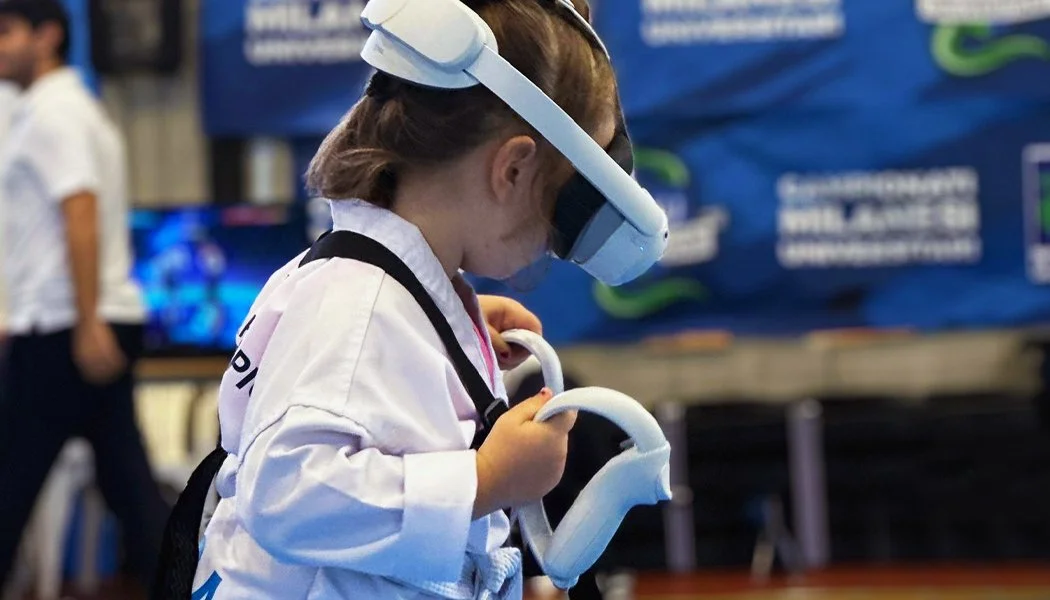
Il Virtual Para-Taekwondo Test Day, che si è tenuto il 23 novembre presso la palestra del CUS Milano, ha messo in luce come la realtà virtuale possa offrire nuove opportunità di partecipazione per numerose categorie del para-taekwondo, specialmente per quelle in cui il combattimento tradizionale non è previsto.
L’attività è stata seguita dagli operatori internazionali ufficiali Matteo Cito e Cristina Pescante, garantendo supporto tecnico e supervisione qualificata.
Tra gli atleti con autismo lieve è emerso un forte interesse sia per la tecnologia sia per il gioco, senza particolari difficoltà nell’utilizzo di visori e sensori. L’esperienza immersiva, che mantiene lo sfondo reale, ha favorito anche una forma di ragionamento tattico e di problem solving.
Più complessa la partecipazione di persone con sindrome di Down e ritardo cognitivo grave: la comprensione del gioco è risultata difficile, ma l’aspetto competitivo è stato forte e autentico, dimostrando quanto la motivazione al confronto resti un elemento fondamentale dello sport.
Per le persone con danni cerebrali è necessario prestare attenzione alla presenza di epilessia, poiché l’uso del visore potrebbe rappresentare un rischio. Positivi invece i riscontri negli atleti con emiplegia e compromissioni cognitive lievi, pur con alcuni limiti tecnici legati alla gestione dei sensori e alle difficoltà nel calciare.
Dall’evento sono emerse proposte innovative per ampliare l’accessibilità del sistema: dall’utilizzo delle braccia per simulare i calci, fino a feedback sonori e tattili pensati per persone cieche o ipovedenti. Necessari alcuni adattamenti solo per chi presenta malformazioni agli arti superiori, mentre gli atleti con amputazioni agli arti inferiori hanno partecipato con efficacia simile ai normotipici.
Nonostante alcuni spazi di miglioramento, il Para Virtual Taekwondo si è rivelato un laboratorio prezioso di inclusione e innovazione, aprendo la strada a nuove possibilità di partecipazione sportiva attraverso la tecnologia.
Evento organizzato dalla Federazione Italiana Taekwondo insieme alla Fondazione “Fight The Stroke” e all’ASD ATP Ikigai Taekwondo Biella della Maestra Alessandra Coda.
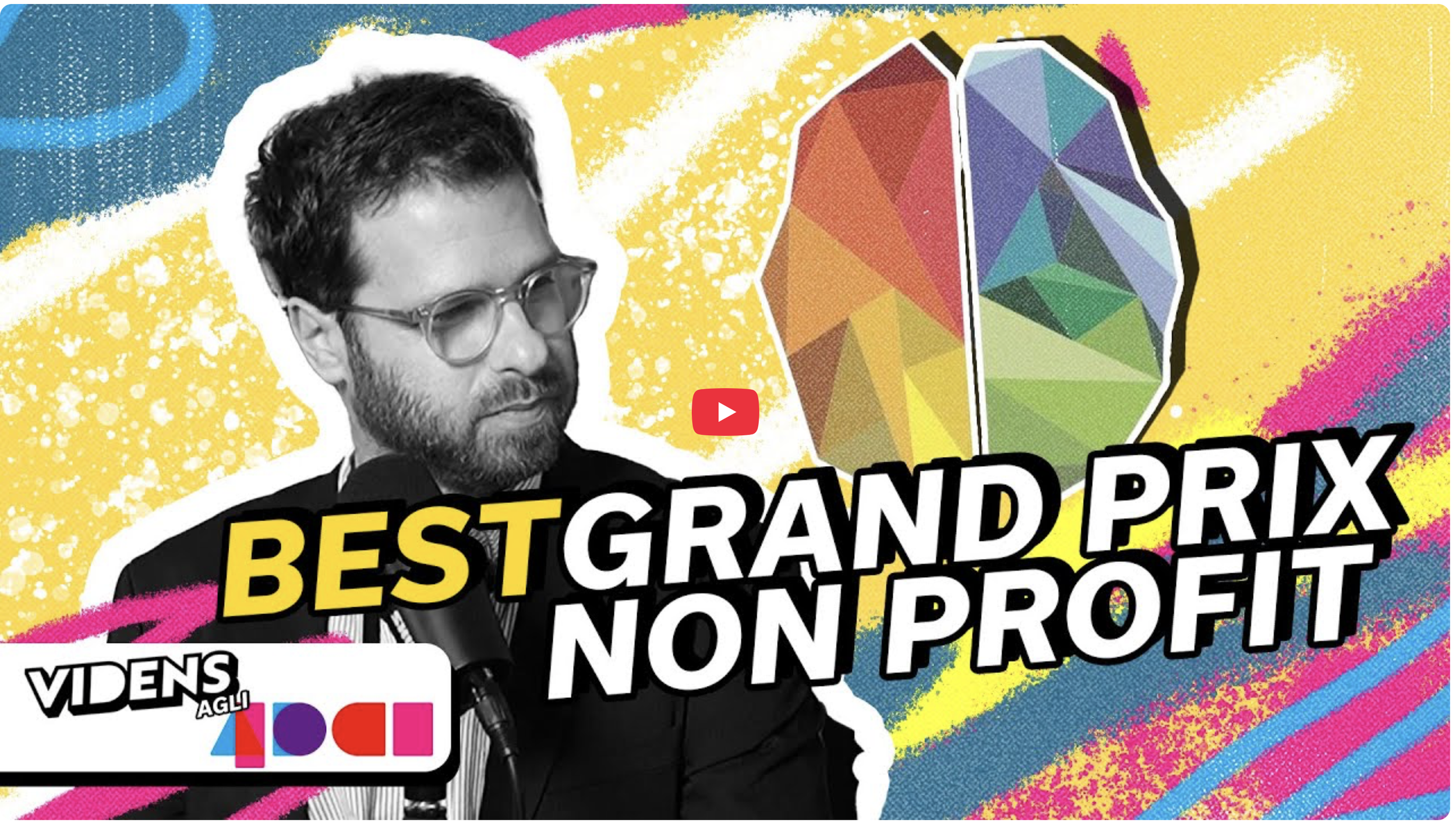
Cosa succede quando la creatività non punta a vendere, ma a cambiare il mondo? 👉 Nasce More Than Palsy, Grand Prix Non-Profit agli ADCI Awards 2025, firmato DUDE per FightTheStroke. Un progetto che parte da una poesia dello scrittore scozzese Jack Hunter – You’ve Got To Be Ballsy To Have Cerebral Palsy – e si trasforma in un film potente capace di mostrare la realtà della paralisi cerebrale senza filtri e senza pietismo. Nel video, Lorenzo Picchiotti, Chief Creative Officer di DUDE, racconta a Niccolò Di Vito come questa campagna sia un mix di voci che si racconto collettivo di forza e rispetto. 🎥 Un’intervista firmata VIDENS, direttamente dagli ADCI Awards, per raccontare la creatività più bella: quella che ha impatto. #VIDENS #ADCI #DUDE #FightTheStroke #MoreThanPalsy #GrandPrix #NonProfit #Creativity #SocialImpact #Advertising #Storytelling #NiccoloDiVito
I bambini notano tutto. Vedono il compagno che non parla, quello seduto diversamente, quello che deve uscire più spesso per fare fisioterapia. "E se tu non gli dai una risposta, si creano loro la risposta - spiega Fedeli -. Quello che viene consigliato, sia ai docenti ma più spesso alle famiglie, è di dare comunque degli elementi, delle spiegazioni alla classe".
Ma perché gli insegnanti non possono farlo direttamente? "I docenti non lo possono fare, è comunque un dato sensibile. Però i genitori sì, i genitori possono chiedere al docente di intervenire, di fare delle lezioni". Anche perchè c'è un cortocircuito: i bambini notano solo l'insegnante di sostegno, ma "per legge è un insegnante che viene assegnato alla classe, quindi non è nominativo, non si può dire a chi è assegnato".
Come affrontare allora il tema con i più piccoli? "Con la nostra Fondazone utilizziamo dei moduli che lavorano sul gioco di ruolo, sul role play: mettiti nei panni di e sperimenta quel tipo di condizione - racconta Fedeli -. È il linguaggio più vicino al bambino, è ancora un'epoca in cui loro fanno tanto prendere e mettersi nei panni di, impersonificare un altro ruolo". Un esempio pratico: "Si mettono due bambini di spalle, uno deve fare una costruzione con i Lego e deve raccontare all'altro come l'ha fatta, però sempre rimanendo di spalle. L'altro deve capire. Così ci si rende conto di come sia difficile interpretare senza utilizzare tutti i sensi". Lo stesso si può fare con le disabilità uditive, attraverso laboratori che aiutano i bambini a mettersi davvero nei panni dell'altro.
Fondamentale è anche il lavoro sul linguaggio. "Ancora ad oggi ci portiamo dietro una serie di pregiudizi che poi ci fanno utilizzare questo linguaggio abilista - spiega Fedeli -. Il fatto che utilizziamo le parole scorrette per definire una persona, o che viene prima la disabilità che la persona stessa, ce lo portiamo dietro fin dall'infanzia. Da quello che vedi, da quello che ascolti, da come parlano i tuoi genitori".
Ci sono alcuni errori comuni in cui è facile cadere. Il primo: "Pensare che una persona con disabilità sia lei che ti debba spiegare tutto. Va bene essere curiosi, va bene chiedere, soprattutto a quell'età, quando sono ancora piccoli, però la persona con disabilità, che sia piccola o grande, potrebbe non aver voglia di parlarne. Quindi è giusto voler sapere, voler essere messi in condizione, ma non deve essere sempre solo la persona con disabilità che deve dare tutte queste spiegazioni".
Altri due errori frequenti sono quelli opposti: sminuire o enfatizzare. "Dire 'lui è in carrozzina, come tu porti gli occhiali' – non è così e lo sappiamo. Sempre con i giusti termini, si può spiegare perché quella persona è in carrozzina". Dall'altro lato "enfatizzare troppo, quindi dire 'ma guarda come Marco, pur essendo in carrozzina, si sa allacciare la camicia benissimo' – non è una cosa che va enfatizzata perché altrimenti ottieni l'effetto opposto, quello che chiamiamo inspiration porn, quindi enfatizzare troppo le caratteristiche".
Un aspetto spesso trascurato riguarda gli ausili: "Tutto ciò che sono gli ausili personali – dalla carrozzina al bastone, altri vari sensori o device tecnologici – fanno parte della persona e non vanno toccati se non con il suo benestare. Va chiesto il permesso prima, perché questo tipo di ausili fanno parte della sfera della persona, per loro sono vitali".
NEW RESEARCH IN PERSONALISED
MEDICINE BASED ON ARTIFICIAL
INTELLIGENCE TO BETTER DEFINE
TAILOR MADE REHABILITATION PATHS
Cerebral Palsy (CP) is a condition that is estimated to
involve 17 million individuals in the world, representing
the consequence of a brain damage which can occur
during intrauterine life, at the time of birth or shortly the
reafter. Although this condition often expresses a wide
variety of symptoms, regarding, among others, senso
rial, perceptual, cognitive and communicative skills, as
well as associated disorders which impact sleep, pain,
learning abilities and in general everyday life functioning,
the most noticeable feature is the motor impairment.
The impact on motor functioning defines the clinical form
of CP, which can be described as: spastic form (stiffness),
which represents the most diffused one; dyskinetic form
(involuntary movements) or ataxic form (impaired coor
dination). The motor impairment can interest different
body parts and each situation defines a different form
of spastic form of CP: hemiplegia / unilateral cerebral
palsy (main involvement of one side the body), diple
gia (main involvement of the lower limbs) or tetraplegia
(involvement of all limbs). In addition to the complexity
of its manifestations, the diagnosis of CP often comes
late. Children with CP need a personalized and inten
sive rehabilitation program, to be started early based
on a detailed assessment of their functional abilities, a
scenario that is not always realistic. This condition can
have a significant economic impact, typical of perma
nent disabilities. With exception of other complications,
people with CP have a similar life expectancy to that of
the general population and a part of them can have a
job and be financially independent. On the other hand,
there are many people with CP who require high level
of assistance, but they can be supported, although par
tially, by assistive technologies to overcome the disabling
barriers of the living context.
The AINCP project
The AINCP project is the largest European research
project funded by the European Union within the HORI
ZON HLTH 2021 DISEASE 04 program in the field of
personalized medicine for people with unilateral cere
bral palsy. The duration of the project is five years overall
from June 2022 to May 2027. The project acronym
AINCP means clinical validation of Artificial Intelligence
for providing a personalized motor clinical profile asses
sment and rehabilitation of upper limb in children with
unilateral Cerebral Palsy. The project aims to validate
new artificial intelligence algorithms for functional dia
gnosis and personalized tele rehabilitation of children
with unilateral cerebral palsy. The goal is to create more
advanced tools to understand children’s daily diffi
culties, and to better define tailor made rehabilitation
paths, with a sustainable approach from both ethical and
economic point of views. For this goal, AINCP is valida
ting new functional assessment tools, more advanced
than the scales currently in use, which will allow doc
tors to obtain a more comprehensive view of children’s
limitations in daily life and to personalize rehabilitation
programs based on their individual needs.
Si è conclusa l’edizione 2025 degli ADCI Awards, l’iniziativa promossa dall’Art Directors Club Italiano che celebra l’eccellenza della creatività pubblicitaria italiana, mettendo in luce le migliori campagne, le idee innovative e i talenti emergenti del settore. La premiazione si è svolta a chiusura di Intersections, il più grande evento in Italia dedicato a Marketing, Comunicazione, Creatività e Tecnologia.
Questa edizione degli ADCI Awards ha visto brillare il Grand Prix, assegnato a Good To Read Packs di DDB Group Italy per Bennet (CDP Karen Film), mentre il Grand Prix Non Profit incorona More Than Palsy – You’ve Got to Be Ballsy to Have Cerebral Palsy di DUDE per Fight The Stroke.
https://www.gqitalia.it/article/ddb-group-italy-dude-trionfano-adci-awards-2025
https://www.engage.it/eventi/adci-awards-2025-il-grand-prix-va-a-ddb-group-italy-per-bennet-il-grand-prix-non-profit-a-dude-per-fight-the-stroke.aspx
https://youmark.it/adci-awards-2025-il-grand-prix-a-good-to-read-packs-di-ddb-group-italy/