

The Social Innovation
FightTheStroke Foundation, founded by Francesca Fedeli and Roberto D’Angelo after their son’s stroke at birth, is dedicated to improving the lives of children with a disability of cerebral palsy.
They applied mirror neuron research to her son’s rehabilitation, discovering that “empathy was at the core of his treatment,” and that peer-led therapy led to remarkable progress.
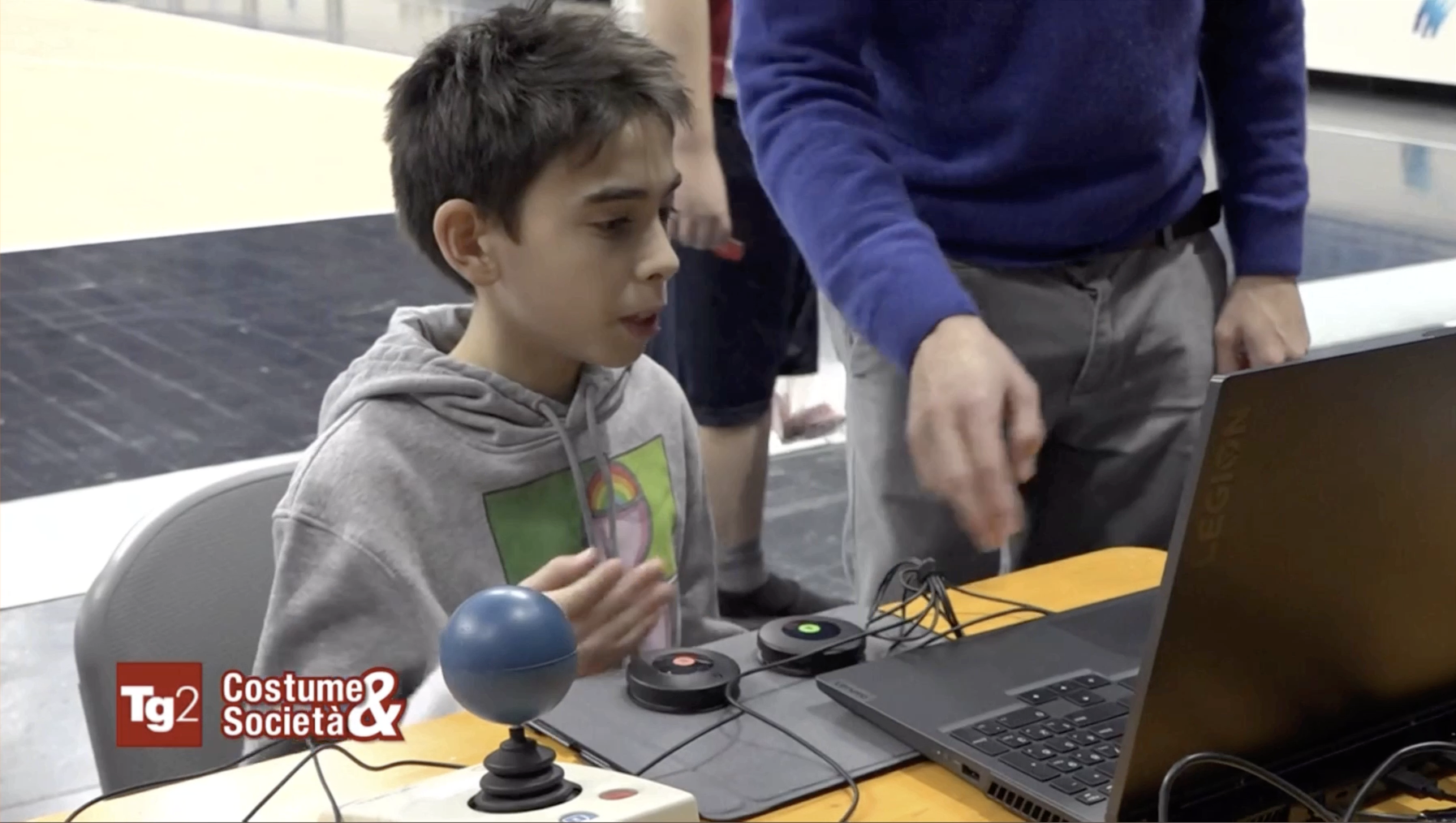
They matched this insight with technology and developed a toolkit for dynamic rehabilitation exercises for children using devices like the Kinect. They piloted this approach with families, collecting feedback and preparing for clinical trials.
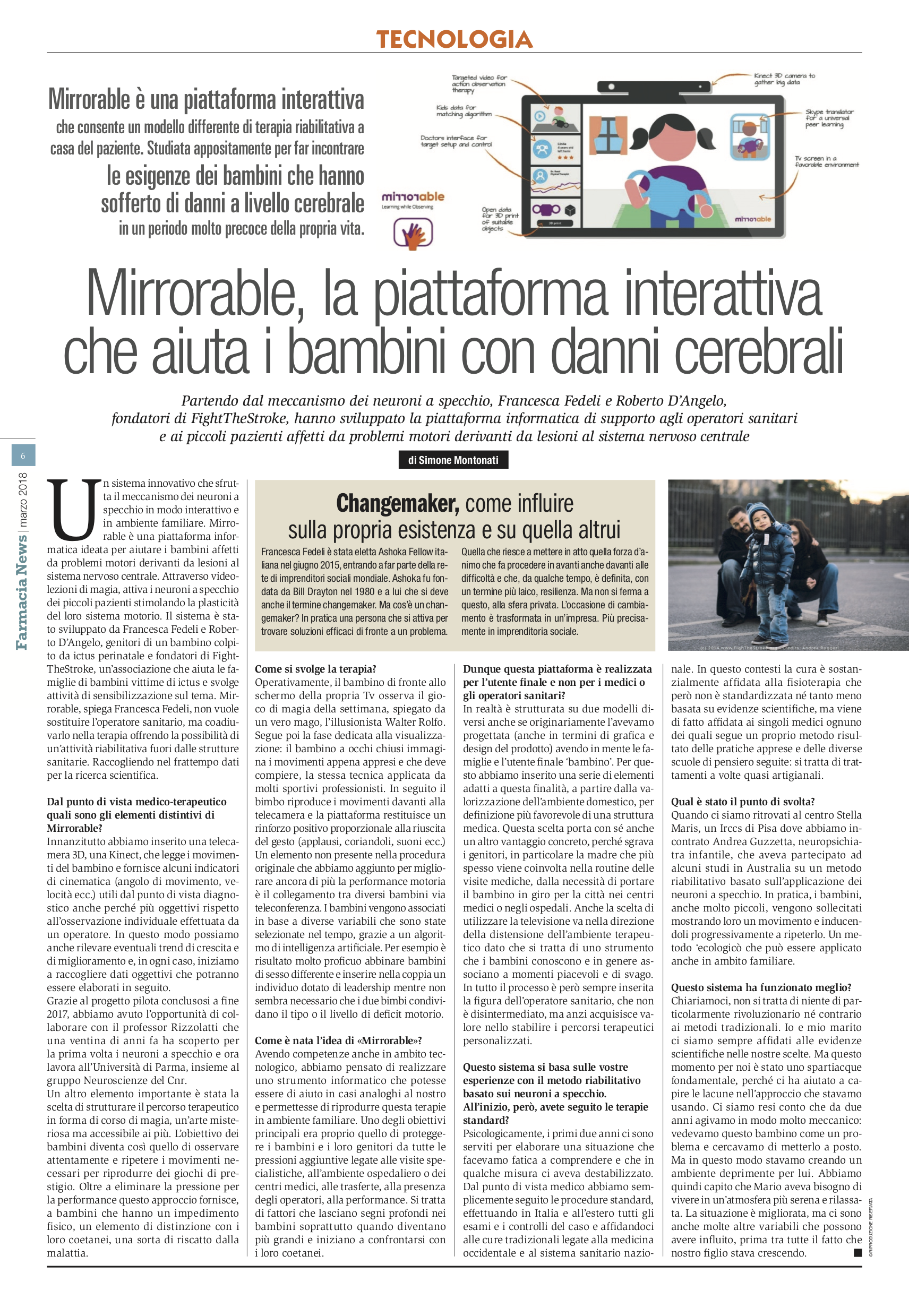
Their flagship innovation, Mirrorable, is a digital rehabilitation platform leveraging mirror neuron theory and tailored video content to support motor recovery in children, while empowering families to play an active role in therapy.
From 2014-2016, they built an active community of over 1200 families and 100 young adults with Cerebral Palsy in Italy and established partnerships abroad.
Magnitude of the Problem, and its Root Causes
Globally, 50 million people face motor impairments due to a disability of Cerebral Palsy, with a much larger network of affected families. Stroke is among the top ten causes of death for children and one among 100 leading causes to Cerebral Palsy, yet public awareness is extremely low. Early detection is still limited; rehabilitation is often inadequate and not tailored to children.
During their participation in the Globalizer co-created by Ashoka and Philips Foundation in 2016, they highlighted the following key factors contributing to the magnitude of the problem:
Lack of children-tailored rehabilitation solutions
Absence of scientifically proven, evidence-based methods to support recovery
Families historically excluded from the rehab process
Fragmented advocacy and low awareness
Late intervention and insufficient data collection
Healthcare innovation not informed by people with lived experience
Based on their systems change analysis, FightTheStroke made it a mission to address the absence of methods to treat motor impairments by making motor outcome-based rehabilitation the norm for young people with a disability of Cerebral Palsy in Italy and beyond.
there are 50 million people around the world affected by this issue. how could i hope to change the lives of all of them without support from other foundations? for me, building alliances was the key ingredient. the globalizer program gave me the framework and language to understand and pursue systemic change. before, i knew what i wanted to achieve, but i didn’t know how to structure the path to get there. the process helped me clarify my strategy, connect with allies, and scale our impact far beyond what we could have accomplished alone.
Strategy to Catalyze a Network of Changemakers towards the Targeted Mission
The strategy to make motor outcome-based rehabilitation the norm included building the “New Rehab Ecosystem”.
Some of the tactics they deployed towards the mission as a part of the strategy include:
1) Co-creating Mirrorable with Families & MIRROR-LABS with Allies
FightTheStroke piloted the Mirrorable platform with 20 families and iteratively kept refining it based on real-world feedback.
Emphasis on co-creation: families were not passive recipients but active partners in shaping the solution.
what we have not achieved is the scale up of our own platform. at the beginning, we thought that we could scale it horizontally to other fields, but this didn’t work. but then what i learned from ashoka, it was not a matter of patenting our idea, but we were also happy that others could ‘steal’ our idea and make their own path.
Over the years, they developed multiple alliances, as with Ospedale Gaslini in Genova, Politecnico di Milano, Bocconi University, other private and public organisations that helped to solve main problems within the framework of MIRROR-LABS (a virtual lab aimed to match families issues with researchers solutions).
Through MIRROR-LABS they co-design solutions with families and for families and explore together the leading edge of science, design, technology, business models in order to create a more inclusive world that can last after them.
2) Co-creating a Consortium with Allies to Integrate Learnings into National Healthcare Systems
Although FightTheStroke initially faced challenges in scaling up their rehabilitation platform independently, the success and credibility of their pilot projects opened the door to a much larger opportunity.
Their innovative approach and early results attracted the attention of leading researchers and clinicians across Europe and Australia, ultimately resulting in an invitation to co-create a major international Consortium. This Consortium named AINCP (Artificial Intelligence in Unilateral Cerebral Palsy) was established to collectively advance the field of pediatric neurorehabilitation.
The Consortium secured a €6 million grant from the European Union to fund an ambitious clinical trial. The primary objective of this initiative is to integrate evidence-based, patient-centered rehabilitation practices into national healthcare systems across participating countries. By pooling expertise and resources, the Consortium aims to move beyond isolated pilots and embed these innovations at a systemic level, ensuring that children with cerebral palsy receive the highest standard of personalized care regardless of where they live.
A key feature of the Consortium’s strategy is the use of telemedicine and data-driven methodologies. By harnessing artificial intelligence, digital tools and remote monitoring, they plan to support national healthcare systems in delivering personalized rehabilitation programs tailored to each child’s unique needs. This approach not only increases accessibility—especially for families in remote or underserved areas—but also ensures that interventions are informed by real-time data and the latest scientific evidence. Through this collaborative effort, FightTheStroke and its partners are working to transform pediatric neurorehabilitation from a fragmented, top-down model into an integrated, patient- and family-centered system across Europe and beyond.
3) Co-creating a Peer Learning Community for Parents to Consult each other
Recognizing the isolation many families experience, FightTheStroke leveraged social media to create a vibrant online space (Facebook Communities) where more than 1,200 families in Italy—and many more internationally—could connect, share experiences, and support one another.
everything was around social media. this is the place where we interact continuously with these 1,200 families in italy. every day there is someone who says, ‘i have this problem,’ but i do not need to answer anymore because the community does. it’s enough that another mother who already came through this problem has the answer, the solution.
This online community quickly became a lifeline for families, offering not only emotional support but also practical advice and shared resources. Over time, the community evolved to include both online and offline spaces, such as family gatherings and the formation of specialized sub-communities for young adults with cerebral palsy, who face unique challenges as they transition into adulthood.
Importantly, Francesca’s model empowered families to move from being passive recipients of information to becoming active advocates and peer leaders. Experienced parents began to take on mentorship roles, answering questions and guiding others through challenges they had already faced. This peer-to-peer support structure not only lightened the load for Francesca and her team but also fostered a sense of agency and solidarity among families, making the community truly self-sustaining.
4) Co-created the first Perinatal and Children’s Stroke Centre in Italy
Recognizing the critical gaps in early diagnosis and coordinated care for children with neurological conditions, FightTheStroke co-created the first Italian Center for Perinatal and Children Stroke, together with Gaslini Children's Hospital, a major Italian children hospital.
so now when people come to us, we send them to this hospital. it’s for free. they have a day hospital screening, do any kind of exam or scans, and then at least they go out, have a diagnosis and a rehabilitation plan.
This center represents a significant shift in the landscape of pediatric neurorehabilitation in Italy. For the first time, families have access to a dedicated facility where comprehensive screening, diagnosis, and the development of individualized rehabilitation plans are provided at no cost.
Beyond the initial diagnosis, the center also serves as a hub for research and for ongoing support. Families are linked to a network of specialists and peer communities, ensuring that they are not left to navigate the complexities of care alone.
By establishing this center, FightTheStroke has created a replicable model that bridges the gap between medical innovation and real-world access, offering hope and practical solutions to families across the country.
5) Creating and Disseminating Knowledge to Inform, Invite & Involve More Allies for the “New Rehab Ecosystem”
Beyond sharing the Mirrorable platform, FightTheStroke is creating and disseminating knowledge to spread awareness about the problem and invite involvement towards the mission through a variety of channels including:
Published a long selling book (from 2015 to 2024) - LOTTA E SORRIDI- to spread awareness, which has sold 4000 copies; in addition their story has been published in 10 more books.
Created a YouTube playlist with the largest repository of video-interviews with our network of experts in healthcare, sports, education, technology, design and everything related to Cerebral Palsy. It has 135 videos and 861 subscribers.
Given 100 keynote talks, among participating to around 500 events - from TED Global in Edinburgh to World of Business Forum in Milan, from Frontiers of Health in Berlin to Ciudad de las Ideas in Mexico.
Written 13 scientific publications in peer reviewed journals; supported more than 30 thesis to further study FighttheStroke model.
Created international campaigns like More than Palsy to shift the storytelling around disability.
Received more than 100 recognitions and awards for their work.
Organized Call4Brain-TEDMED events to create space to discuss challenges of medicine, science and technological innovation. So far, they have had 6 events attended by more than 1000 people.
Gotten involved with 23 networks and alliances like the Eisenhower and The Global Good Fund fellowships and joined the boards of 5 organizations to further spread awareness about and advocate for people with Cerebral Palsy.
Created an alliance with the International Cerebral Palsy society and have a network reach with organizations in the space in more than 60 countries.
Become part of the Valuable500 Directory in Italy (founded by another Ashoka Fellow), to end disability exclusion in the workplace.
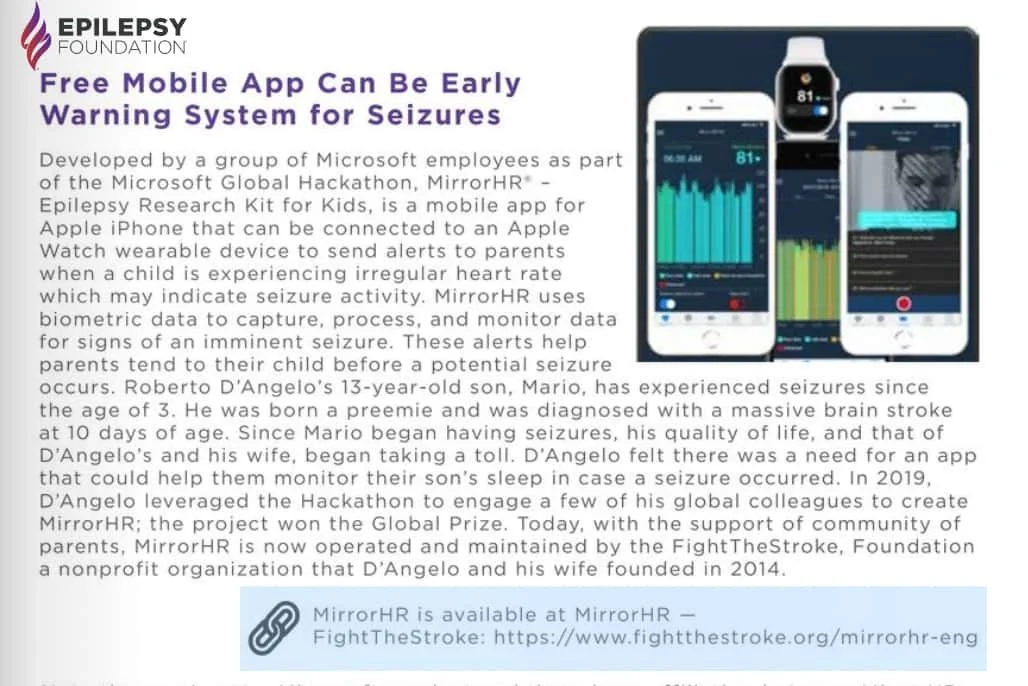
Developed and shared the MirrorHR epilepsy research kit: 16,000+ downloads from the app store, translated in 21 languages, available for free in 61 countries.
Francesca Fedeli
Ashoka Fellow elected in Italy
Became an Ashoka Fellow in 2015
Venture Partners
Elected with support from
Participated in the Globalizer in
2016
Globalizer Partners
Participated with support from
Elements of the Collaborative Systems Change Strategy
Hover/Click on things to dive deep
Systems Change Goal
Type of Root Cause identified as a Leverage Point for Systems Change (Donella Meadows)
Type of Strategy
Endgame / Pathway applied towards Activating a Network of Changemakers towards the targeted Systems Change
Types of Partners Engaged
Types of stakeholders activated as changemakers towards the systems change
Government AgenciesIndustry-specific Companies / OrganizationsMedia CompaniesPublishersInformal & Formal Communities / UnionsUniversities / Schools
Levels of Stakeholder Engagement
The depths of engagements in play for the different stakeholders (CoCreative)
Their work contributes towards
Sustainable Development Goals
Sustainability Principles
The root causes of global socio-ecological unsustainability their work is addressing (FSSD)
barriers to healthbarriers to competencebarriers to impartialitybarriers to participationbarriers to meaning making